Austin vs. Mexico City Grand Prix — Which F1 Race Should You Attend?
The 2026 F1 calendar puts the United States Grand Prix and the Mexico City Grand Prix on back-to-back weekends — Austin on October 23–25, Mexico City on October 30–November 1. They're separated by a two-hour flight and seven days, which makes them natural candidates for a comparison. Or, if you're ambitious, a double-header.
Both are incredible race weekends. Both have world-class food scenes, passionate crowds, and circuits with real character. But the experiences are genuinely different — in atmosphere, in culture, in logistics, and in what the city offers beyond the track.
Here's how they compare.
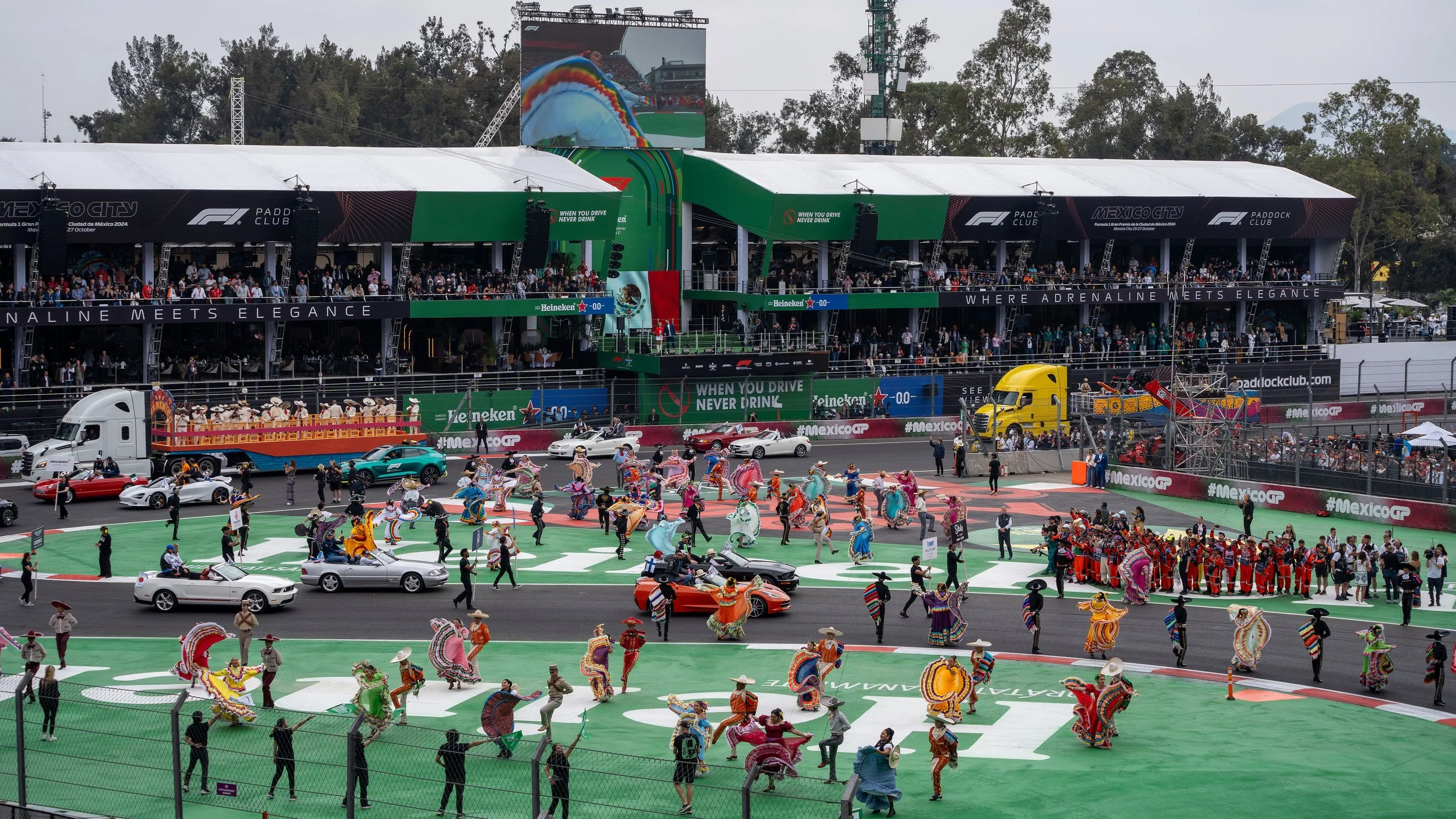
The Foro Sol. There's nothing like it anywhere else in F1 — 40,000 fans inside a stadium, screaming as the cars pass through.
The Atmosphere
Austin feels like a festival with a race in the middle. COTA draws around 120,000 fans per day, and the crowd is a mix of international visitors, American newcomers to the sport (the Netflix effect is real), and Texans who showed up for the concerts and stayed for the racing. The vibe is energetic and social — people are there to have a good time. Post-race concerts are a major draw (past headliners include Taylor Swift, Elton John, Billy Joel, and Garth Brooks), and the whole weekend has a relaxed, party-like energy that's very Austin.
Mexico City is pure passion. The crowd at Autódromo Hermanos Rodríguez is one of the loudest, most emotional fan bases in Formula 1. Mexican flags wave from every grandstand, and the Foro Sol — a former baseball stadium that now forms part of the circuit — creates a football-match atmosphere as cars thread through the slow-speed stadium section. The energy is intense, intimate, and deeply personal. This isn't just a sporting event for the fans here — it's a point of national pride.
The verdict: If you want a social, all-encompassing weekend with music and entertainment baked in, Austin. If you want raw, unfiltered racing passion that gives you goosebumps, Mexico City.
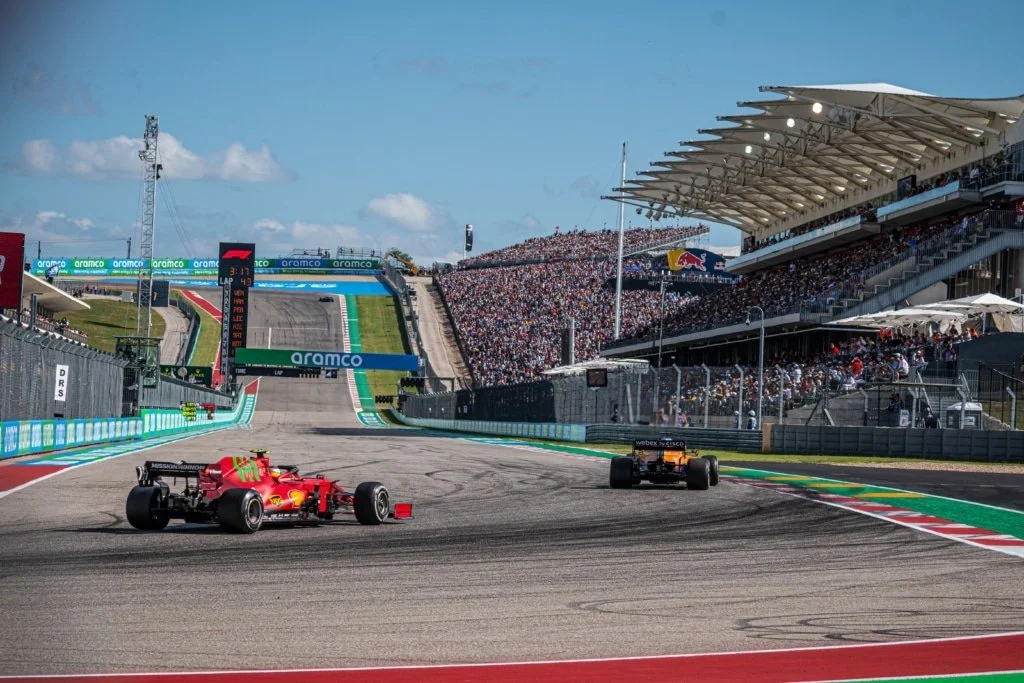
The 133-foot climb into Turn 1 at COTA — one of the most dramatic corners in Formula 1.
The Circuits
Circuit of the Americas (COTA) is a purpose-built F1 track, and it shows. At 5.5 kilometers with 20 turns, it's one of the most complete circuits on the calendar. The uphill charge into Turn 1 — a dramatic 133-foot climb — is one of the most spectacular corners in the sport. The layout borrows inspiration from famous corners around the world (Silverstone's Maggotts/Becketts, Istanbul's Turn 8, Hockenheim's stadium section), and the elevation changes make for fantastic racing with natural overtaking opportunities.
Autódromo Hermanos Rodríguez is a very different beast. The circuit sits at over 2,200 meters (7,300 feet) above sea level — the highest altitude on the F1 calendar. The thin air reduces aerodynamic downforce, which means teams can run high-downforce setups without the usual drag penalty. The result: cars hit speeds above 350 km/h (215 mph) on the main straight, some of the highest top speeds all season. The Foro Sol stadium section is the signature feature — a slow-speed complex inside the former baseball stadium that creates an amphitheater of noise.
The verdict: COTA is the better driver's circuit — technically challenging with variety at every corner. Mexico City is the more unique spectacle — the altitude physics, the absurd straight-line speeds, and the stadium section make it unlike anything else on the calendar.
One more thing worth noting for Austin: F1 Academy — the all-female racing series — returns to COTA in 2026 as a support race. The F1 Academy paddock is open and accessible, meaning you can walk right up to the cars, watch the teams work, and meet the drivers at autograph sessions. For anyone who cares about the future of women in motorsport (and if you're reading this blog, you probably do), it adds a meaningful layer to the Austin weekend.
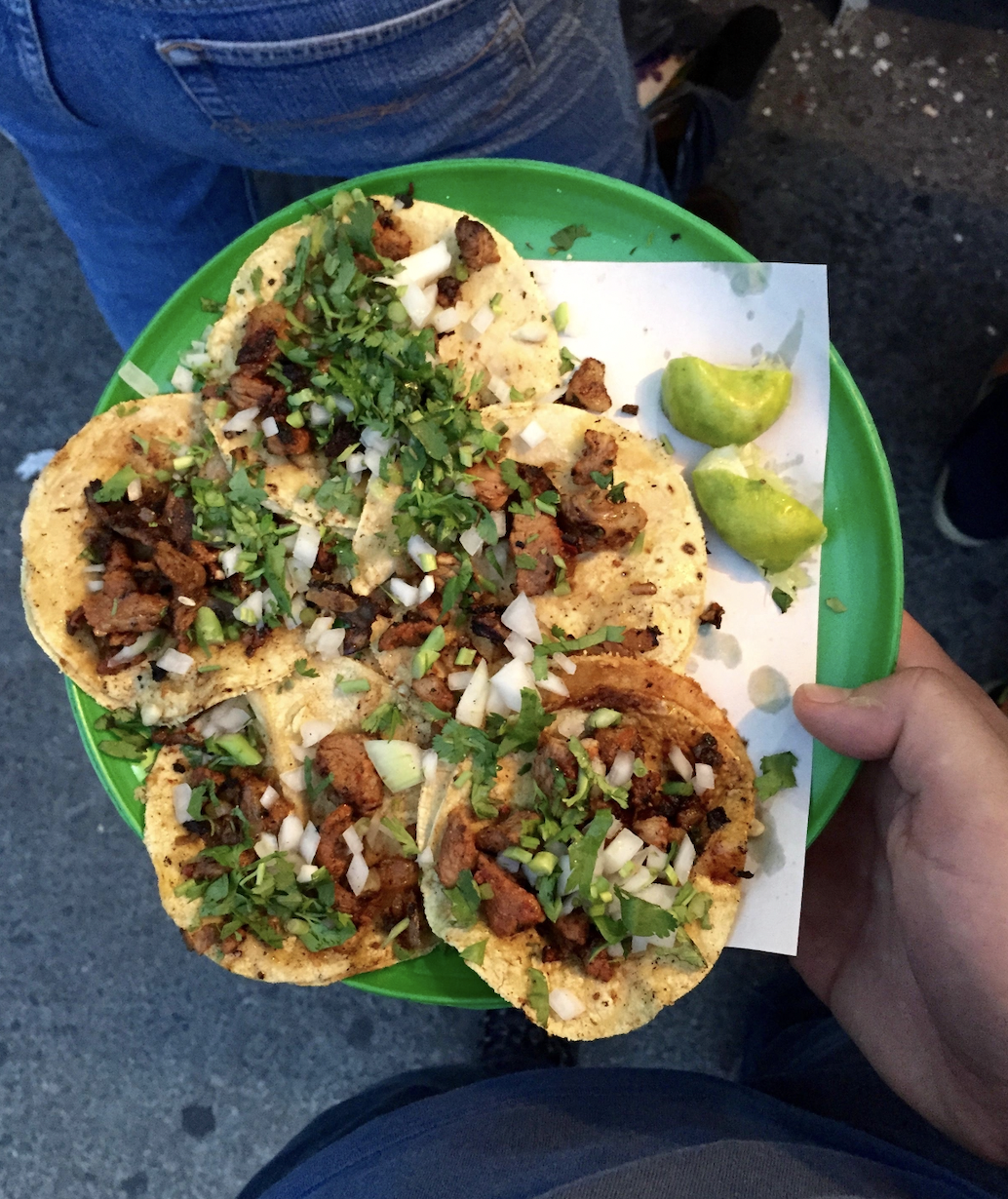
The taco al pastor might be the most perfect food on Earth. And in Mexico City, they cost about a dollar.
The Food
This might be the most important category.
Austin is the BBQ capital of Texas, and the quality is staggering. Franklin Barbecue is the most famous name (expect a multi-hour line unless you order ahead), but places like la Barbecue, Micklethwait Craft Meats, and Terry Black's are equally outstanding. Beyond BBQ, Austin's food truck scene is enormous, and Tex-Mex is everywhere — breakfast tacos are practically a religion. The COTA Culinary Experience during race weekend features 30+ restaurants showcasing the best of Texas cuisine.
Mexico City has one of the deepest food cultures on the planet. Street tacos (al pastor from a trompo, suadero, barbacoa) are transcendent, and you can eat extraordinarily well for almost nothing. The fine dining scene is equally impressive — restaurants like Pujol and Quintonil regularly appear on the World's 50 Best list. The OTTR Mexico City itinerary includes lunch at Contramar (the most famous seafood restaurant in the city) and dinner at Voraz, plus a private guided food tour that goes deep into the neighborhoods most tourists never see.
The verdict: Both are elite food cities. Austin wins on BBQ and breakfast tacos. Mexico City wins on depth, variety, and value — it's one of the best food cities in the world at any price point.
Weather
Austin in late October is generally mild — temperatures between 60–80°F (15–27°C) during the day, cooler in the evenings. Texas weather is famously unpredictable though, and rain has disrupted multiple COTA weekends. Pack layers and a rain jacket.
Mexico City at the same time of year is slightly cooler — 55–75°F (13–24°C) — and the altitude makes it feel crisper than you'd expect for a city this far south. Rain is less likely than Austin but still possible. The thin air at 7,300 feet can catch you off guard if you're not used to altitude — stay hydrated and take it easy on the first day.
The verdict: Both are comfortable race weekend climates. Austin is slightly warmer, Mexico City is slightly more predictable. Neither will make or break your experience.
Getting to the Circuit
Austin — COTA is about 15 miles (24 km) southeast of downtown, and getting there is the one logistical challenge of the weekend. Traffic is heavy on race days. Shuttle services run from downtown, and rideshare works but expect surge pricing and long waits after the race. Parking is available but fills up fast. Downtown Austin itself is walkable and well-served by scooters and rideshare.
Mexico City — Autódromo Hermanos Rodríguez is just a few miles from the city center and is genuinely easy to reach. The Ciudad Deportiva metro station is a short walk from the circuit entrance, and Mexico City's metro system is extensive, reliable, and cheap (about $0.30 USD per ride). The airport is only 20 minutes from the track. Logistics-wise, this is one of the most accessible circuits on the entire F1 calendar.
The verdict: Mexico City wins decisively. Metro access right to the circuit is a game-changer compared to COTA's shuttle-and-traffic situation.
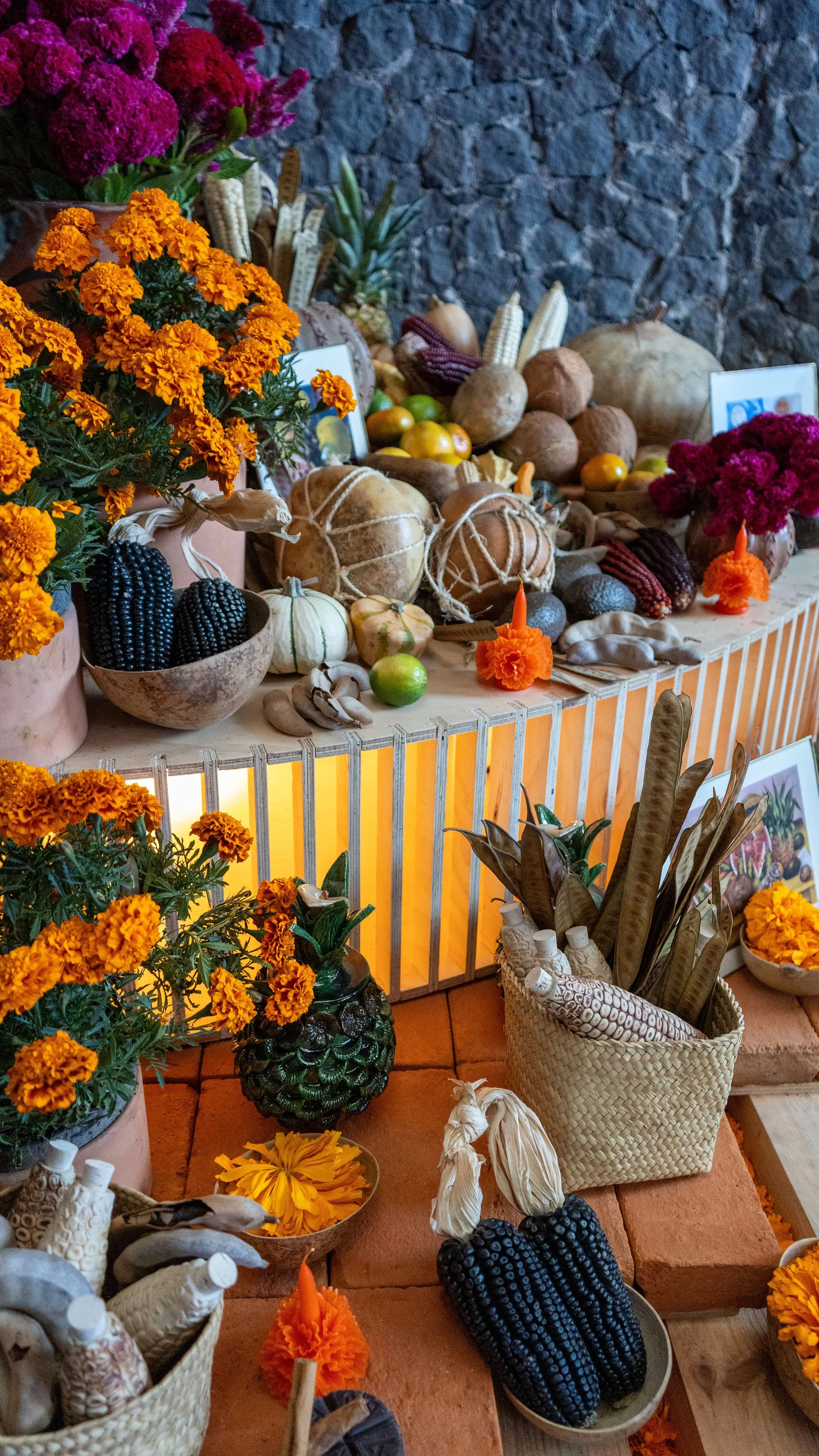
The Mexico City Grand Prix falls during Día de los Muertos season — the whole city comes alive with altars, marigolds, and celebrations.
What to Do Beyond the Track
Austin is the self-proclaimed "Live Music Capital of the World," and it earns the title. Sixth Street has live music every night of the week. South Congress (SoCo) is the neighborhood for boutique shopping, galleries, and people-watching. Barton Springs and Lady Bird Lake offer outdoor escapes if you need a break from the noise. The city's "Keep Austin Weird" ethos shows up everywhere — in the food trucks, the street art, the independent shops, and the general attitude that nothing needs to be too serious.
Mexico City is one of the great cultural capitals of the world. The Museo Frida Kahlo is a pilgrimage site for art lovers. The National Museum of Anthropology is world-class. The Zócalo (the central plaza) is the heart of the city, and Chapultepec Park — one of the largest urban parks in the Americas — is home to a castle, a zoo, and several museums. The neighborhoods of Roma, Condesa, and Coyoacán feel like different cities entirely, each with their own personality, restaurants, and energy.
The OTTR Mexico City itinerary includes a private guided tour of the Museo Frida Kahlo, lunch at Contramar, a visit to the Ofrenda Monumental at the Zócalo (the Mexico City Grand Prix coincides with Día de los Muertos season — the city is transformed with altars, marigolds, and celebrations), and dinner at Voraz and Botánico.
The verdict: Both cities are fantastic destinations. Austin is more relaxed and music-focused. Mexico City is deeper, richer, and more culturally immersive — it's a world-class city that happens to have a Grand Prix.
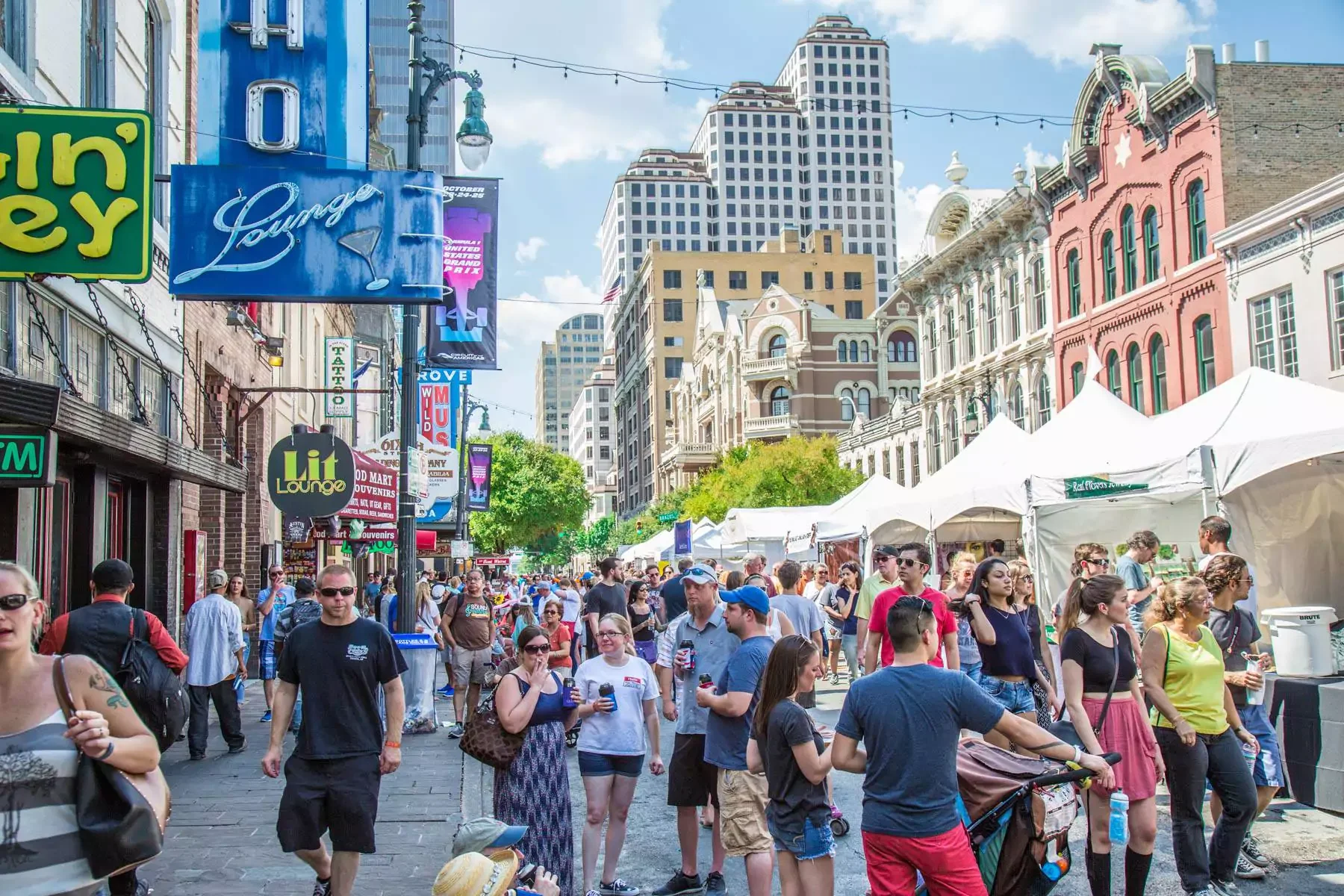
Austin's Sixth Street — live music every night, no cover charge required.
The Back-to-Back Play
Here's the thing: you don't have to choose. Austin and Mexico City are a week apart and a two-hour flight from each other. Some fans fly to Austin for the US Grand Prix on October 23–25, then head to Mexico City for the October 30–November 1 weekend.
OTTR is running a Mexico City Grand Prix package this year — four nights at the Mondrian Mexico City in La Roma/Condesa, Foro Sol grandstand seats, a private Frida Kahlo tour, Michelin-recommended dining, a private Pilates class, and the full OTTR experience with a group of women who love F1.
If you're going to Austin anyway and want to extend the trip into something truly special, Mexico City is the move.
→ Explore the Mexico City Package
Not sure which race is right for you? Check out all of our 2026 weekends or send us a message — we're happy to help you figure it out.
